

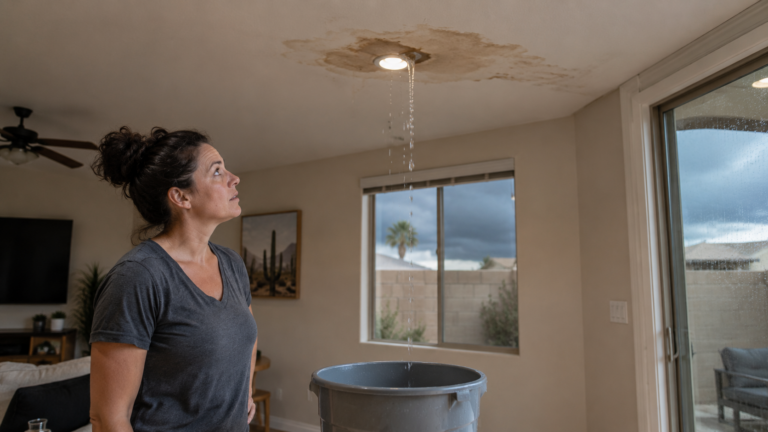
A roof leak can be an emergency when water is entering rapidly, the ceiling is sagging, water is near electrical fixtures, or part of the roof has been damaged and more severe weather is approaching.
Many leaks are urgent without creating an immediate danger. Your first priority should be keeping everyone away from unsafe areas, limiting interior damage when it can be done safely, and arranging an inspection to determine where the water entered.
Do not climb onto a wet roof or attempt repairs during an active storm. Wet tile, shingles, foam, and walk decks can be extremely slippery, and storm damage may make parts of the roof unstable.
Water appearing through the ceiling also does not always come from the roof. Plumbing, air-conditioning condensate lines, windows, stucco, and rooftop equipment can produce similar symptoms.
Finding water dripping from the ceiling is stressful, and most homeowners immediately wonder whether they need to panic.
A better approach is to slow down, stay out of danger, and evaluate what is happening.
A roof leak is more likely to require immediate action when:
If there is an immediate electrical, structural, or personal-safety concern, leave the affected area and contact the appropriate emergency professional.
Do not climb onto the roof during a storm.
Stay away from any area where water is entering through or near a light fixture, ceiling fan, outlet, electrical panel, or appliance. Do not touch wet electrical equipment or stand in water while attempting to operate a switch or circuit breaker.
You may be able to shut off power to the affected area if the breaker can be reached without entering a wet or unsafe location. When there is any uncertainty, leave the area and call an electrician or emergency service.
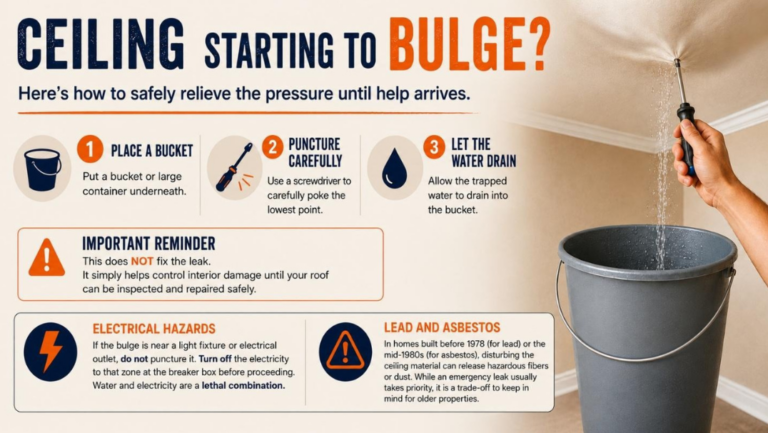
A sagging or swollen ceiling also requires caution. Water trapped above drywall adds weight and may cause part of the ceiling to fall.
Do not stand beneath the damaged area or puncture, cut, or open the ceiling yourself. Disturbing wet material may cause a collapse, expose electrical hazards, or release dust from older building materials.
Homes built before 1978 may contain lead-based paint, and some older ceiling products may contain asbestos. Neither can be identified reliably by appearance alone.
Is the Water Definitely Coming From the Roof?
Not always.
During Phoenix monsoon season, homeowners often notice water for the first time during a storm and naturally assume the roof is leaking. Sometimes that is exactly what happened. Other times, the source is elsewhere.
Air conditioners run heavily during hot, humid weather. If a condensate drain becomes clogged, disconnected, or overwhelmed, water may back up into the home and appear near the ceiling.
Other possible sources include plumbing lines, windows, stucco cracks, wall transitions, rooftop HVAC equipment, and penetrations through the building envelope.
Even when the roof is involved, the leak may not be directly above the stain.
Water can enter in one location, travel along underlayment, framing, pipes, or insulation, and finally appear several feet away. The stain tells you where the water became visible—not necessarily where it entered.
That is why a proper inspection should examine both the roof and the path the moisture may have followed.
Not every leak requires the same response. It can help to think of the situation in three levels.
This category includes active water intrusion, sagging ceilings, electrical exposure, visible structural damage, or a roof that has been opened by falling debris or severe wind.
Stay out of the affected area and move people and pets to a safe location. If water is spreading but can be approached safely, move nearby furniture, electronics, rugs, and valuables.
Call for professional help as soon as possible. Depending on the situation, that may include a roofer, electrician, plumber, HVAC contractor, water-remediation company, or emergency service.
Temporary roof protection may be necessary, but it should be installed only when weather conditions allow the work to be completed safely.
Most residential roof leaks fall into this category.
You may notice a brown ceiling stain, intermittent dripping during heavy rain, damp drywall, peeling paint, a musty odor, or a leak that returns during certain storms.
The home may not be in immediate danger, but something is allowing moisture into the structure.
That problem should be inspected promptly, especially during monsoon season. Storms often arrive in cycles, and a small amount of water during one storm can become a much larger problem during the next.
Moisture may also spread through insulation, decking, framing, and drywall before the damage becomes obvious inside the home.
For more on the consequences of postponing the inspection, see [What Happens If You Ignore a Roof Leak During Monsoon Season in Phoenix].
Some homeowners notice a slipped tile, cracked sealant, small foam crack, damaged shingle, debris impact, or minor stain without active water intrusion.
When the interior is dry and no immediate storms are expected, you may have more time to arrange an inspection and repair.
However, roofing problems rarely correct themselves. Phoenix heat, ultraviolet exposure, wind, and repeated storms can turn a small maintenance issue into a larger opening.
A problem does not need to be an emergency to deserve attention.
Begin with what you can do safely from inside.
Move valuables away from the affected area. Place buckets or containers under drips when you can reach them without standing beneath unstable drywall or near electricity. Use towels to limit water spreading across floors, baseboards, or cabinets.
Take photos and short videos of the water, ceiling stains, damaged belongings, and any visible exterior damage you can document from the ground. Note when the leak began and what the weather was doing at the time.
Do not open walls or ceilings, tear out drywall, or attempt to diagnose hidden damage yourself.
The goal during the storm is not to complete the repair. It is to keep people safe, limit avoidable interior damage, and preserve information that may help determine what happened.
A tarp may help temporarily after a storm, but homeowners should not climb onto the roof during heavy rain, lightning, or strong wind.
Tile can become slippery and may crack underfoot. Shingles, foam, and walk decks can also become slick. Damage caused by wind or debris may not be visible until someone steps onto the affected area.
A large tarp is also difficult to control in the wind. Even professional roofers may need to wait until the weather improves before accessing the roof.
Temporary protection is not a permanent repair. Its purpose is to reduce additional water intrusion until the damaged area can be inspected and corrected properly.
The visible stain is often only the final point along the water’s path.
Water may enter beneath a broken tile, damaged flashing, lifted shingle, failed foam transition, or roof-to-wall connection. It can then travel across the waterproofing layer or along framing before reaching the ceiling.
Insulation may absorb and spread moisture over a much larger area than the stain suggests. Decking can also remain wet without being visible from inside the living space.
This is why looking only at the ceiling stain can lead to an incomplete diagnosis.
The inspection should identify where the water entered, how far it traveled, whether materials remain wet, and whether the leak is isolated or part of broader deterioration.
For more information about the inspection process, see [What to Expect During a Roof Inspection].
Once conditions are safe, the roofer should evaluate the roof system rather than simply patching the area above the stain.
Depending on the type of roof, the inspection may include tile and underlayment condition, flashing, penetrations, valleys, shingles, foam coating, scuppers, drainage paths, parapets, vents, previous repairs, and visible wood damage.
The roofer should also consider whether the leak appears to be caused by a sudden event or by a condition that has been developing over time.
A storm may create a new opening, but it can also expose an older weakness. Wind-driven rain sometimes enters through a flashing detail that does not leak during lighter rain. A broken tile may allow water to reach underlayment that was already deteriorating.
The inspection should help separate the immediate symptom from the underlying cause.
Many roof leaks can be repaired when the problem is localized and the surrounding roofing system remains serviceable.
A failed flashing detail, damaged penetration, small foam puncture, limited shingle problem, or a few broken tiles may not require replacing the entire roof.
Replacement becomes more likely when leaks recur, deterioration is widespread, moisture has affected a larger area, or the existing roof no longer provides a dependable base for repair.
On an older tile roof, the tile may still appear intact while the underlayment beneath it has deteriorated in several areas. Repairing the location that leaked may stop water there without addressing other weak sections.
The practical question is whether the proposed repair is likely to remain dependable based on the condition of the rest of the roof.
For help understanding that decision, see [Roof Repair vs Replacement in Phoenix].
No. An active leak tells you that water has found a path into the home. It does not tell you how large the repair will be.
Some dramatic-looking leaks come from relatively limited problems. Other small stains reveal broader deterioration once the roof and attic are inspected.
Roof age is part of the decision, but it is not the only factor. Installation quality, repair history, material condition, drainage, underlayment, previous storm damage, and the extent of moisture intrusion all matter.
In some cases, replacing only the affected section may be possible. In others, partial work may not provide a reliable transition or warranty.
For more on limited replacement, see [Can You Replace Just Part of a Roof in Phoenix].
You may be able to wait for daylight when the dripping is limited, the ceiling is stable, no electricity is involved, everyone is safe, and you can contain the water without entering a hazardous area.
That does not mean waiting several weeks.
Call the roofing company, document the issue, and arrange the inspection as soon as practical. Even when the rain stops, moisture may remain in insulation, decking, or drywall.
If the conditions change—water increases, the ceiling begins sagging, electricity becomes involved, or part of the structure appears unstable—leave the area and treat it as an emergency.
The roof still needs to be evaluated.
A leak that stops with the rain usually means the immediate source of water has ended. It does not mean the opening has sealed itself.
The next storm may approach from a different direction, bring stronger wind, or last longer. A leak that appeared minor the first time may become more severe.
Phoenix roofs can also deteriorate without leaking during every storm. Wind direction, rainfall intensity, and where water collects all affect whether a weak area allows moisture inside.
For more on hidden deterioration, see [Why Roofs Fail Faster in Phoenix (Even When They Look Fine)].
The cost depends on the cause, roof type, accessibility, extent of the affected area, and whether hidden damage is present.
A limited repair may involve a penetration, flashing detail, a few tiles, shingles, or a small foam area. A larger repair may require replacing underlayment, decking, insulation, fascia, or a broader roof section.
The size of the interior stain alone is not enough to estimate the repair.
For a more complete explanation of common repair ranges and pricing factors, see [How Much Roof Repair Costs in Phoenix: What Homeowners Actually Pay].
A roof leak is not always a middle-of-the-night emergency, but it should never be ignored.
Treat it as an emergency when water is entering rapidly, the ceiling is sagging, electricity is involved, the structure appears unstable, or the home is exposed to additional storms.
Otherwise, protect the interior, document what you see, stay off the roof, and schedule an inspection promptly.
Do not assume the stain is directly below the source, and do not assume every leak means the entire roof must be replaced.
The goal is to identify where the water entered, determine how much damage occurred, and decide whether a repair can provide a dependable solution.
If water is entering your home, begin by making the area safe and limiting interior damage without putting yourself at risk.
Once conditions allow, schedule an inspection with Raving Roofs. We will evaluate the roof, document what we find, and explain whether the issue appears isolated, storm-related, age-related, or part of a larger roofing problem.
Clear information helps you make the next decision without panic—and before the next storm makes the problem worse.