

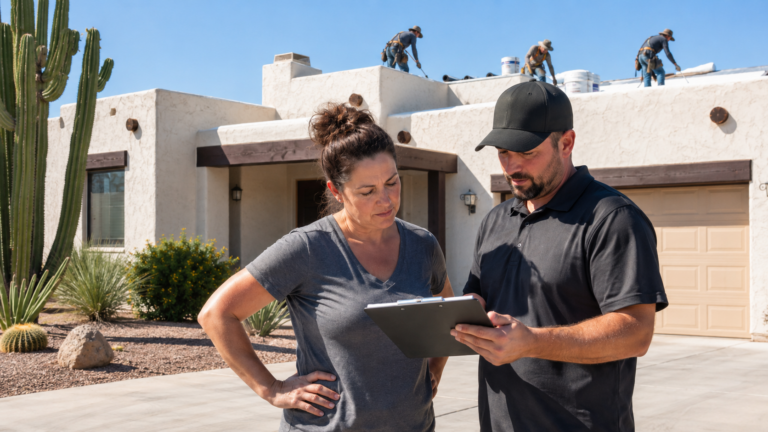
Most Phoenix homeowners can expect a roof replacement to cost somewhere between $10,000 and $30,000 or more; this depends largely on the roof size, the type of roofing system, ease of access, design, and what problems are found (if any) beneath the existing materials.
A straightforward shingle roof may fall near the lower end of that range. A large two-story tile roof with complicated valleys, damaged wood, premium underlayment, and difficult access can cost considerably more.
The wide range is why two estimates for the same home can differ by thousands of dollars or more. The contractors may not be proposing the same materials, components, preparation, or installation process—even when the finished roofs would look similar from the street.
For a closer look at those differences, see [Why Some Roofing Quotes Are Cheaper Than Others].
Replacing a roof is rarely a purchase homeowners look forward to.
It usually becomes necessary because a leak keeps returning, stains are spreading across the ceiling, the roof is visibly aging, or nearby homes of the same age are beginning to need work.
You start requesting prices, hoping to understand whether you are dealing with a manageable expense or a major financial commitment.
One contractor says $15,000. Another says $28,000. A third says the price depends on what is found after the roof is opened.
That uncertainty is frustrating, but it exists because roofs that appear similar from the ground may require very different amounts of labor, preparation, waterproofing, and material.
The roof covering is only one part of the price. You may also be paying for removal, disposal, underlayment, flashing, ventilation, repairs to damaged wood, safety equipment, permits, and the labor needed to complete complicated details correctly.
A broad starting range is $10,000 to $30,000 or more, but the roofing system makes a major difference.
A tile roof project may cost approximately:
Tile remove and replace with new underlayment:
$3.50–$7.50 per roof square foot
Completely new tile roof:
$9.00–$13.00 or more per roof square foot
Tile roofs are common throughout the Phoenix area, but homeowners do not always realize that the visible tile may not be the part that has failed.
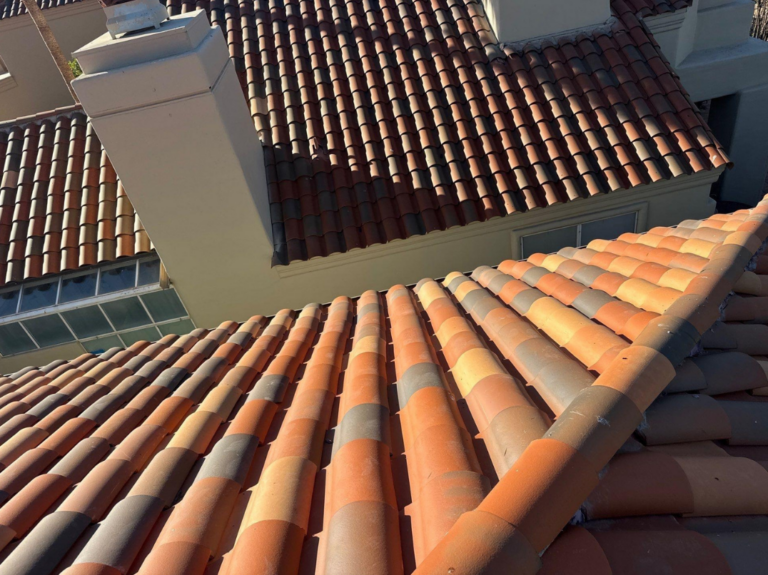
Concrete and clay tile can remain serviceable for decades. The waterproof underlayment beneath it often reaches the end of its useful life much sooner because it is exposed to years of extreme heat.
That is why many Phoenix tile projects are described as a remove and replace, or R&R. The crew carefully removes and stacks the existing tile, rebuilds the waterproofing system beneath it, and then reinstalls the reusable tile.
A completely new tile roof costs more because both the waterproofing system and the tile are replaced.
Tile work is also labor-intensive. Crews may move thousands of pounds of material twice—first during removal and again during reinstallation. On a large or complicated home, access, roof levels, valleys, fascia condition, and damaged decking can add substantial time and cost.
A foam roof may cost approximately:
$3.50–$5.50 per roof square foot
Spray polyurethane foam is commonly used on flat and low-slope homes in Arizona. It creates a seamless roofing surface and can also add insulation value.
A straightforward foam installation may require less labor than a complicated tile project, but the price still depends on the existing roof, preparation, drainage, penetrations, access, and the amount of foam required.
For example, a roof with low areas may need additional foam to improve drainage. That can increase material usage beyond what a simple square-foot calculation would suggest.
Foam also requires periodic maintenance. Its protective coating must be inspected and renewed as it wears. The exact timing depends on the coating system, exposure, maintenance history, and roof condition rather than one fixed schedule.
For a more detailed cost breakdown, see [How Much Does a Foam Roof Cost in Phoenix?].
A metal roof may cost approximately:
$21.00–$26.00 or more per roof square foot
Metal is generally considered a premium roofing option.
It is lightweight, durable, and can provide long-term performance when the right system is installed correctly. It may also suit homeowners who want a modern appearance or a roof that differs from traditional tile.
The higher cost reflects both the material and the specialized installation. Flashing, seams, penetrations, transitions, panel fabrication, and thermal movement all need to be managed carefully.
Metal installation mistakes can be difficult and expensive to correct because important details may be locked beneath the panels.
Homeowners should also confirm HOA requirements before investing significant time in a metal-roof proposal. Some communities restrict the material, panel profile, color, or appearance.
For help comparing the strengths and tradeoffs of each system, see [What Is the Best Roofing Material for Phoenix Homes].
A shingle roof may cost approximately:
$5.00–$9.00 per roof square foot
Shingles are often one of the less expensive roofing systems upfront, but Phoenix heat and ultraviolet exposure are hard on them.
Over time, shingles can dry out, become brittle, lose granules, crack, or curl. The actual service life depends on the product, installation quality, ventilation, attic temperature, sun exposure, and maintenance.
Roof shape also affects shingle pricing. Valleys, skylights, HVAC equipment, multiple levels, ventilation work, and complicated flashing details all require more labor.
A simple shingle roof can move quickly. A highly cut-up roof with several penetrations and transitions cannot.
Roofing is priced based on the actual roof area, not the livable square footage shown in a real estate listing.
A 2,500-square-foot home rarely has exactly 2,500 square feet of roofing.
Pitch, overhangs, garages, patios, elevation changes, and roof design increase the total surface area.
As a rough planning guide:
Roof design | Approximate roof area compared with home footprint |
Flat or very low slope | 0%–10% larger |
Simple low-pitch roof | 10%–15% larger |
Moderate-pitch roof | 15%–25% larger |
Steeper or complicated roof | 25%–40%+ larger |
A 2,500-square-foot home might therefore have approximately 2,500–2,750 square feet of roof if it is flat and simple, 2,875–3,125 square feet if it has a typical pitch, or 3,250 square feet or more if it is steep or complicated.
This is why online calculators and price-per-square-foot figures are useful starting points, but they cannot replace an inspection and accurate roof measurement.
Roof size is only the beginning.
A larger roof requires more material and labor, but several other conditions can change the price significantly.
Steeper roofs take longer to work on and require additional safety precautions. Materials are also more difficult to stage and move.
A simple roof with large, open sections moves more quickly than one with several elevations, valleys, walls, skylights, HVAC units, penetrations, or difficult transitions.
Every interruption in the roof surface requires additional cutting, flashing, waterproofing, and inspection.
A single-story home with open access around it is usually easier to complete than a two-story property with narrow side yards, landscaping, pools, walls, or limited space for materials and equipment.
Removal costs depend on the roof system and how many layers are present.
An older flat roof may have several roofing systems installed over one another. A tile roof requires careful handling if the existing tile will be reused.
Two contractors may quote very different underlayments, flashings, membranes, or waterproofing details.
Those differences may not be visible after the project is complete, but they can affect cost and long-term performance.
Some roof replacements include ventilation corrections or upgrades.
Ventilation can affect attic heat and the performance of certain roofing materials, but the right approach depends on the design of the home and the roof system.
Licensed contractors account for permits, current code requirements, insurance, safety procedures, trained labor, and required roofing components.
Items such as flashing, valley metal, eave details, ventilation, and roof-to-wall transitions may need to be updated as part of the project.
Homeowners often assume that every contractor is quoting the same roof replacement.
They may not be.
One proposal may include premium underlayment, new flashing, ventilation work, damaged-wood allowances, permits, debris removal, and documented inspections.
Another may use a different underlayment, reuse certain components, exclude repairs, or rely on allowances that can increase once construction begins.
A lower estimate is not automatically wrong, and a higher one is not automatically better. The important question is whether the proposals describe the same scope.
Ask each contractor to explain:
The goal is to compare the work being proposed—not just the number at the bottom.
Some roof conditions cannot be confirmed until the existing materials are removed.
Common discoveries include rotted decking, damaged fascia, deteriorated wood around penetrations, structural concerns, and previous repairs that were covered instead of corrected.
This does not mean every roof replacement will produce unexpected charges.
It means a contractor should explain in advance how concealed damage is handled, what the repair rates are, and whether approval is required before additional work begins.
Clear expectations before construction are much better than a surprise after the roof has already been opened.
Not every roofing problem requires replacement.
A localized leak, isolated flashing problem, a few damaged tiles, a limited shingle issue, or a small foam puncture may be repairable if the rest of the roof remains in serviceable condition.
Replacement becomes more likely when deterioration is widespread, leaks keep returning, previous repairs are failing, or the roof no longer provides a dependable base for additional work.
The decision should be based on the condition of the full roofing system—not simply the age of the roof or the location of one leak.
For more help with that decision, see [Roof Repair vs Replacement in Phoenix].
You can also review [Can You Replace Just Part of a Roof in Phoenix] if the problem appears limited to one section.
The right roofing investment depends partly on how long you plan to own the home and what the existing roof actually needs.
A homeowner planning to stay for many years may place more value on premium underlayment, stronger materials, longer-term performance, and reduced maintenance.
Someone preparing to sell may make a different choice, particularly if a repair can address the immediate issue reliably.
When the budget is limited, prioritize the parts of the roof that keep water out. In Phoenix, the waterproofing beneath tile or the details around penetrations and transitions may matter more than the visible surface.
The least expensive system is not necessarily the lowest-cost choice over time. But the most expensive system is not automatically the best choice for every home either.
Because roof replacement is a major expense, some homeowners pay in cash while others use contractor financing, home-improvement loans, or a home-equity line of credit.
Insurance may be involved when damage results from a covered event, such as wind, hail, or falling debris. Coverage depends on the policy, cause of loss, deductible, exclusions, and the insurance company’s decision.
A roofing contractor can inspect and document damage, but the insurer determines whether the claim is covered.
Before receiving a final proposal, the contractor should inspect the roof, identify the roofing system, measure the surface, document visible damage, and look for conditions that may affect the scope.
A good inspection should help answer:
For a fuller explanation of the process, see [What to Expect During a Roof Inspection].
Most Phoenix roof replacements fall somewhere between $10,000 and $30,000 or more, but the price depends on much more than the visible roofing material.
Roof size, pitch, complexity, access, removal, underlayment, flashing, damaged wood, permits, labor, and the quality of the proposed system all affect the final number.
When estimates differ significantly, do not assume the lowest contractor is cutting corners or the highest contractor is overcharging.
First determine whether the companies are proposing the same roof.
The cheapest estimate may not be the least expensive roof over time. But the right decision begins with understanding what is failing, what is included, and why the recommended work is necessary.
Schedule a professional roof inspection and ask for photos, a clear diagnosis, and a written scope of work.
The contractor should be able to show you what is wrong, explain your options, and identify the factors affecting the price.
If a contractor cannot show you the problem, they should not be asking you to pay to fix it.